
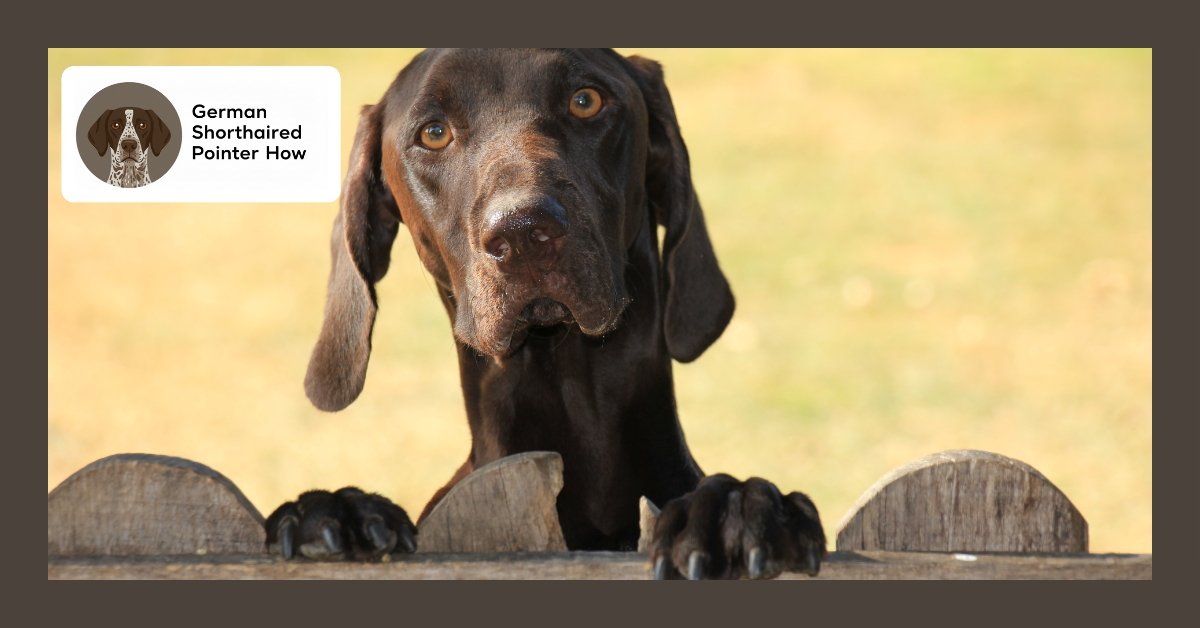
Does your German Shorthaired Pointer launch themselves at every guest who walks through your door? If you’re struggling with an overly enthusiastic GSP who treats every greeting like an Olympic high-jump event, you’re not alone. This breed’s legendary energy and affectionate nature can quickly become overwhelming when 55-70 pounds of pure muscle comes bounding toward you.
Training a German Shorthaired Pointer not to jump requires addressing their high energy through structured exercise, implementing consistent positive reinforcement for calm behavior, and establishing clear boundaries across all household members. Unlike other breeds, GSPs need mental stimulation and physical outlets before they can successfully practice impulse control.
The good news? With the right approach tailored to this intelligent, people-loving breed, you can transform your jumping GSP into a polite greeter. According to the American Kennel Club, early training is essential, as GSPs remain excitable and puppy-like until around age three. Let’s explore proven strategies that respect your dog’s natural temperament while establishing the calm manners you deserve.
Understanding Why German Shorthaired Pointers Jump
German Shorthaired Pointers display what trainers call “professional-class” energy levels. This isn’t just typical puppy exuberance. It’s a deeply ingrained trait bred into these versatile hunting dogs over generations.
Jumping stems from excitement and lack of impulse control, not dominance or bad intentions. Your GSP jumps because they’re genuinely thrilled to see you, lack clear boundaries, or haven’t learned more appropriate greeting behaviors. The breed’s intelligence and people-focused nature intensify this behavior pattern.
Without adequate physical exercise and mental stimulation, GSPs channel their boundless energy into attention-seeking behaviors. Jumping becomes their default strategy for engaging with humans, especially when other outlets aren’t available.
The Energy Factor You Cannot Ignore
Before attempting any training for jumping, you must address your GSP’s exercise needs. A tired dog is a trainable dog, and this principle applies doubly to German Shorthaired Pointers.
Consider activities like running, fetch, swimming, or even pulling sports. Professional trainers emphasize that asking a GSP with pent-up energy to sit calmly is like asking a caffeinated toddler to meditate. The energy must go somewhere first. If you’re wondering just how much exercise your German Shorthaired Pointer needs, understanding their requirements is fundamental to addressing behavioral issues.
However, exercise alone won’t solve jumping problems. Mental stimulation through puzzle toys, scent work, and training sessions creates the balanced foundation necessary for behavioral success.
Training German Shorthaired Pointer Not to Jump: Step-by-Step Method
Positive reinforcement forms the cornerstone of modern, effective GSP training. Experts including Belinda Venner from the GSP Club of America strongly discourage aversive methods, which damage trust and often backfire with this sensitive breed.
The Calm Greeting Protocol
This proven method teaches your GSP that calm behavior earns attention while jumping results in the opposite. Here’s how to implement it effectively:
- Exercise your dog first: Take your GSP for a 30-60 minute run or vigorous play session before practicing greetings.
- Enter with zero acknowledgment: When you come home, completely ignore your dog if they jump. Turn away, cross your arms, and avoid eye contact.
- Wait for four paws on the floor: The moment all four feet touch the ground, immediately mark the behavior with “yes” or a clicker.
- Reward the calm sit: Ask for a sit, then lavish your GSP with praise, treats, and gentle petting.
- Repeat consistently: Practice this protocol every single time anyone enters your home, with zero exceptions.
Consistency across all family members is crucial. If one person allows jumping while another doesn’t, you’ll confuse your intelligent GSP and severely delay progress.
Managing Training Sessions Effectively
German Shorthaired Pointers learn quickly but lose focus even faster. Keep training sessions under 10 minutes to maintain engagement and prevent frustration.
Short, frequent sessions throughout the day prove far more effective than one long training marathon. Your GSP’s intelligence works against you if sessions become boring or repetitive.
Always end on a positive note with a behavior your dog knows well. This maintains motivation and ensures your GSP looks forward to the next session.
Navigating Developmental Stages and Setbacks
German Shorthaired Pointers experience multiple fear periods and developmental stages that can temporarily derail training progress. Understanding these phases helps you maintain realistic expectations and avoid frustration.
| Age Range | Developmental Stage | Training Considerations |
|---|---|---|
| 6-8 months | First fear period | May become more reactive; maintain positive reinforcement, avoid corrections |
| 12 months | Adolescent rebellion | Testing boundaries; stay consistent, increase exercise and mental stimulation |
| 18 months | Second fear period | Possible regression in training; patience and reassurance essential |
| 2-3 years | Maturation beginning | Energy starts stabilizing; behaviors become more reliable |
During these challenging phases, don’t abandon your training protocols. Instead, increase support, reduce difficulty temporarily, and double down on positive reinforcement for any glimpse of desired behavior.
Handling Regressions Without Losing Ground
Environmental changes, fear periods, or simple teenage rebellion can cause previously mastered behaviors to fall apart. This is normal and doesn’t mean you’ve failed as a trainer.
Return to basics by simplifying your criteria. If your GSP was sitting politely for greetings but has started jumping again, reward even brief moments with four paws down before gradually rebuilding the full behavior.
Increase mental enrichment and physical exercise during regression periods. Often, behavioral backsliding signals that your GSP’s needs have outpaced their current routine.
Practical Solutions for Common Challenges
Real-world GSP ownership presents unique obstacles that generic training advice doesn’t address. Let’s tackle the most common pain points head-on.
Urban Living and Limited Exercise Options
Not every GSP owner has access to sprawling fields or rural trails. If you live in an apartment or urban environment, creativity becomes essential.
Try these energy-burning alternatives:
- Flirt poles: Provide intense exercise in small spaces through chasing and pouncing movements
- Treadmill training: Teaches your GSP to run indoors on rainy days or during extreme weather
- Indoor scent work: Engages your dog’s natural hunting instincts while tiring their brain
- Doggy daycare: Offers socialization and all-day activity when your schedule is packed
- Stair sprints: Quick bursts up and down stairs burn significant energy efficiently
Mental exhaustion equals physical tiredness for intelligent breeds. A 15-minute nose work session can leave your GSP as satisfied as a 30-minute walk. Consider exploring scent tracking training techniques to engage your GSP’s natural abilities while providing mental stimulation.
Managing Multi-Dog Households
If other dogs in your home have different energy levels or training backgrounds, your GSP may struggle to understand when jumping is acceptable. Separate training initially to prevent confusion and competition for attention.
Practice individual greetings before allowing group interactions. Once each dog demonstrates reliable calm behavior solo, gradually introduce them together while maintaining your protocols.
Reward all dogs for remaining calm during greetings. This creates positive peer pressure where dogs reinforce appropriate behavior in each other.
When Physical Limitations Affect Training
Owners with mobility issues or health conditions face unique challenges in exhausting a high-energy GSP. Hiring a dog walker, enlisting family help, or using exercise equipment becomes crucial for success.
Consider investing in automated fetch machines that throw balls while you supervise. These devices allow your GSP to self-exercise while you conserve energy for actual training.
Virtual training sessions with professional GSP specialists can provide customized strategies that work within your physical capabilities. Many trainers now offer individualized support for unique household situations.
Building Long-Term Success With Your GSP
Training a German Shorthaired Pointer not to jump isn’t a one-month project. It’s an ongoing commitment that evolves as your dog matures and your household changes.
The most successful GSP owners view training as a lifestyle rather than a task to complete. They build exercise, mental stimulation, and impulse control practice into daily routines until these elements become automatic.
Remember that your GSP’s intelligence and eagerness to please are tremendous advantages. Channel these traits through clear communication, consistent boundaries, and generous rewards for desired behaviors.
Maintaining Progress Over Time
As your German Shorthaired Pointer matures, don’t abandon the protocols that created success. Continue rewarding calm greetings even after the behavior becomes reliable.
Periodically practice in new environments and with different people. GSPs don’t automatically generalize training across contexts, so exposure to varied scenarios strengthens overall impulse control.
Stay committed to meeting your dog’s physical and mental needs. A bored, under-exercised GSP will revert to jumping and other attention-seeking behaviors regardless of previous training success.
Key Takeaways for Training Success
Successfully training a German Shorthaired Pointer not to jump requires understanding this breed’s unique needs and respecting their developmental timeline. Physical exercise alone won’t solve jumping problems without mental stimulation and clear behavioral expectations.
Positive reinforcement methods build trust and create lasting behavioral change. Punishment-based approaches damage your relationship and often increase anxiety-driven behaviors in this sensitive breed.
Consistency across all household members determines success or failure. Mixed messages confuse your intelligent GSP and exponentially extend training timelines.
Finally, patience through developmental stages separates successful GSP owners from frustrated ones. Your dog’s exuberance stems from joy and affection, qualities worth preserving while shaping appropriate expression. For comprehensive guidance on building a well-mannered companion, explore our German Shorthaired Pointer obedience training guide.
Frequently Asked Questions
How long does it take to train a German Shorthaired Pointer not to jump?
Most GSP owners see significant improvement within 3-6 weeks of consistent training, though complete reliability often takes 3-6 months. Your dog’s age, exercise levels, and household consistency dramatically impact this timeline. Puppies and adolescents naturally take longer than mature dogs, and GSPs don’t fully settle until around age three. Daily practice with zero exceptions accelerates progress considerably.
Why does my GSP only jump on certain people?
German Shorthaired Pointers quickly learn which people enforce boundaries and which don’t. If your dog jumps on guests but not you, they’ve learned that different rules apply to different people. Some individuals may unconsciously reward jumping through excited greetings, eye contact, or physical touch. Ensure all visitors follow your training protocol by turning away and only acknowledging your GSP when all four paws remain on the floor.
Can you train an older German Shorthaired Pointer to stop jumping?
Absolutely. While early training provides advantages, adult GSPs respond excellently to positive reinforcement methods at any age. Older dogs often focus better than puppies during training sessions. The same protocols work regardless of age: exercise first, ignore jumping, reward calm behavior consistently. Adult dogs may initially resist since jumping has worked for years, but persistence and consistency overcome established patterns within weeks.
Is jumping a sign of dominance in German Shorthaired Pointers?
No. Modern canine behavioral science has thoroughly debunked dominance theory in domestic dogs. Your GSP jumps from excitement, lack of impulse control, and because the behavior has previously earned attention. Treating jumping as a dominance issue leads owners toward ineffective, potentially harmful correction-based methods. Instead, view jumping as an untrained behavior requiring clear communication about what earns rewards and attention in your household.
How much exercise does a GSP need before training sessions?
Most German Shorthaired Pointers need 60-90 minutes of vigorous exercise daily, with at least 30-45 minutes before focused training sessions. Running, swimming, or fetch sessions work best for burning excess energy. However, individual needs vary based on age, health, and temperament. You’ll know your GSP is ready when they can settle calmly for a few minutes without constant movement or attention-seeking behaviors.
Should I use a spray bottle or other corrections for jumping?
No. Expert trainers universally discourage aversive corrections including spray bottles, leash jerks, knee bumps, or alpha rolls for jumping. These methods damage trust, can increase anxiety-driven behaviors, and teach your GSP to fear you rather than offering alternative behaviors. Positive reinforcement proves more effective, creates stronger bonds, and produces reliable long-term results. Simply withdrawing attention for jumping while lavishly rewarding calm behavior works far better.
What if my GSP knows not to jump but does it anyway?
This usually indicates insufficient exercise, inconsistent enforcement, or self-rewarding behavior patterns. Evaluate whether your dog’s physical and mental needs are truly being met. Even one person allowing occasional jumping can maintain the behavior indefinitely. Some GSPs find the act of jumping inherently rewarding regardless of your response. In these cases, management through baby gates, leashed greetings, or teaching an incompatible behavior like holding a toy during greetings helps break the cycle.